
Seat, couchette or sleeper? How to choose your night-train cabin
Every European night-train operator uses slightly different marketing names for its cabins — Nightjet calls its top tier “Comfort Plus,” Trenitalia calls its “Excelsior” — but underneath the branding, there are really only four categories. Knowing what each one actually delivers, before you book, saves you from either overpaying for privacy you didn’t need or underestimating what a rough night in a reclining seat really feels like.
The four classes, in plain terms
Seat is exactly what it sounds like: a reclining seat in an open or compartmentalised carriage, the same idea as a daytime train. It’s the cheapest way to travel overnight, from around €19, but sleep quality is the lowest of the four options and comfort varies a lot by how old the rolling stock is.
Couchette puts you in a compartment of four to six fold-down bunks, shared with strangers unless your group books the whole compartment. Berths come with a sheet and blanket, there’s a shared washroom down the corridor, and fares start around €35. This is the classic backpacker option — basic, but it works.
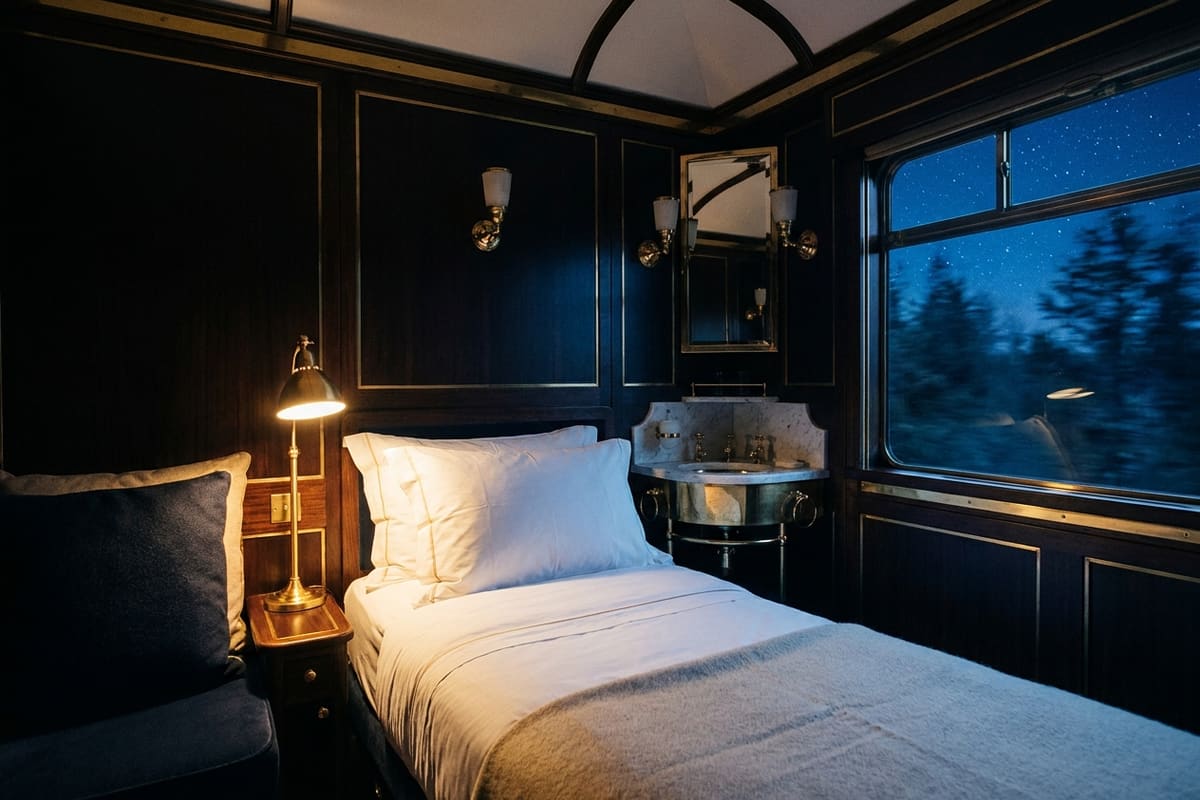
Sleeper compartments have one to three proper made-up beds rather than bunks, and on most operators an in-compartment washbasin. Breakfast is usually included, and the door locks from the inside. This is the standard comfort-for-money choice on most routes, from around €60.
Private / Deluxe cabins are the top tier: one or two beds with an ensuite shower and toilet, found on newer rolling stock like Nightjet’s Comfort Plus, Trenitalia’s Excelsior, or the Caledonian Sleeper’s Double rooms. Expect a welcome drink and breakfast, individual climate control on the newest carriages, and fares from around €100 up to €180 or more on longer or busier routes.
What you’ll actually pay
Prices swing hard by route and demand. A couchette on Paris–Nice starts around €29; the same class on Brussels–Prague with European Sleeper is closer to €79. A private cabin on Rome–Palermo can start near €100, while the equivalent on Amsterdam–Vienna or London–Fort William starts closer to €180. Treat every “from” price as a floor, not what you’ll actually pay if you book close to departure.
Who each one suits
- Seat: short hops under 12 hours, or last-minute bookings when berths are already sold out — seats tend to have the most availability.
- Couchette: groups and friends booking a whole compartment, or solo travellers comfortable sharing with strangers to save money.
- Sleeper: couples, families and anyone who wants a real bed without paying for an ensuite. The sensible middle choice on most routes.
- Private: special occasions, business trips, or anyone who values privacy and a shower more than the extra cost.
Single-sex vs mixed compartments
Couchette compartments booked by strangers are typically mixed by default. Several operators, including Nightjet, let solo travellers request a women-only couchette at booking, subject to availability — it’s worth asking for explicitly rather than assuming it’s automatic. Sleeper and private compartments are effectively private unless you’re travelling with people you know, since you book the whole space.
Sleeping tips
Ask for a bottom bunk if you’re a light sleeper — top bunks sit closer to the corridor lights and mean climbing a ladder in the dark. Pack earplugs and an eye mask regardless of cabin class; trains are noisier than hotels, especially at border crossings and during coupling manoeuvres in the small hours. Don’t expect deep, unbroken sleep on your first night train — most people adjust after one or two trips.
What to bring
- A small padlock for zips, especially in couchette and seat class
- Flip-flops or slides for corridor washrooms
- A change of clothes and a light layer — carriages run warm
- A power bank, since sockets aren’t guaranteed in every cabin class
- Water and snacks — budget operators like France’s Intercités de Nuit rarely have a dining car
Luggage and security
Most operators don’t enforce a strict weight limit, just what you can reasonably carry and store in the overhead rack or compartment. Sleeper and couchette doors lock from the inside, and conductors check tickets at or after departure, which adds a layer of security. In seat class there’s no lockable door, so keep valuables with you rather than in an overhead bag.
Breakfast
Sleeper and private cabins usually include breakfast, sometimes with a welcome drink in the top tier. Couchette breakfast is more hit-or-miss and depends on the operator. Seat class almost never includes food, so plan to bring your own or buy something before boarding.
The honest takeaway: match the cabin to what you actually need for that specific trip. A short overnight hop like Paris–Nice is fine in a couchette; a long haul like Vienna–Split is worth the extra for a sleeper, especially if you want to actually feel rested the next day.